Logic Puzzles in Math Class: Why They Work and 10 Ways to Use Them
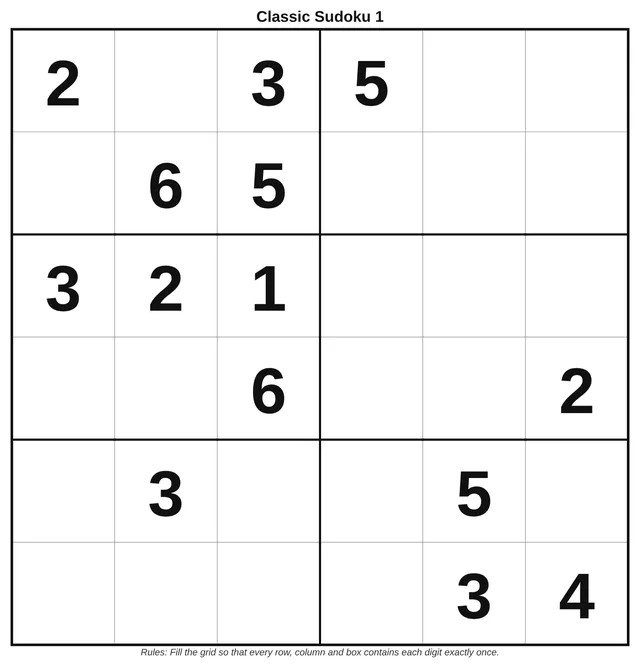
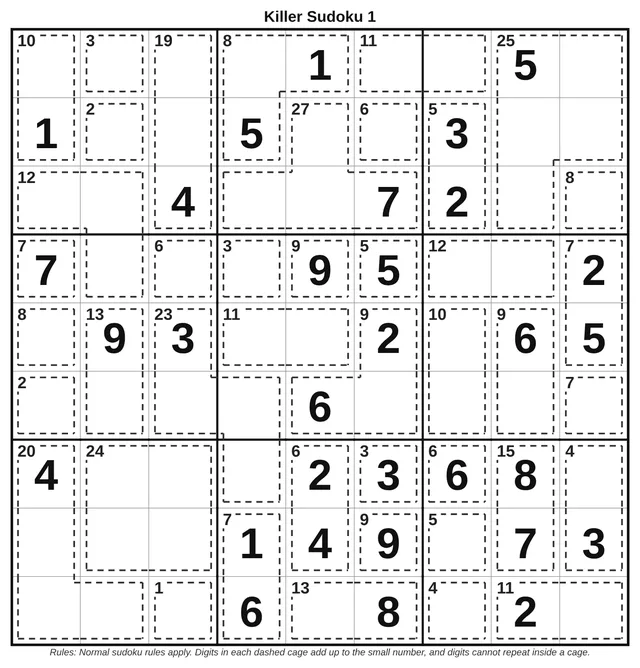
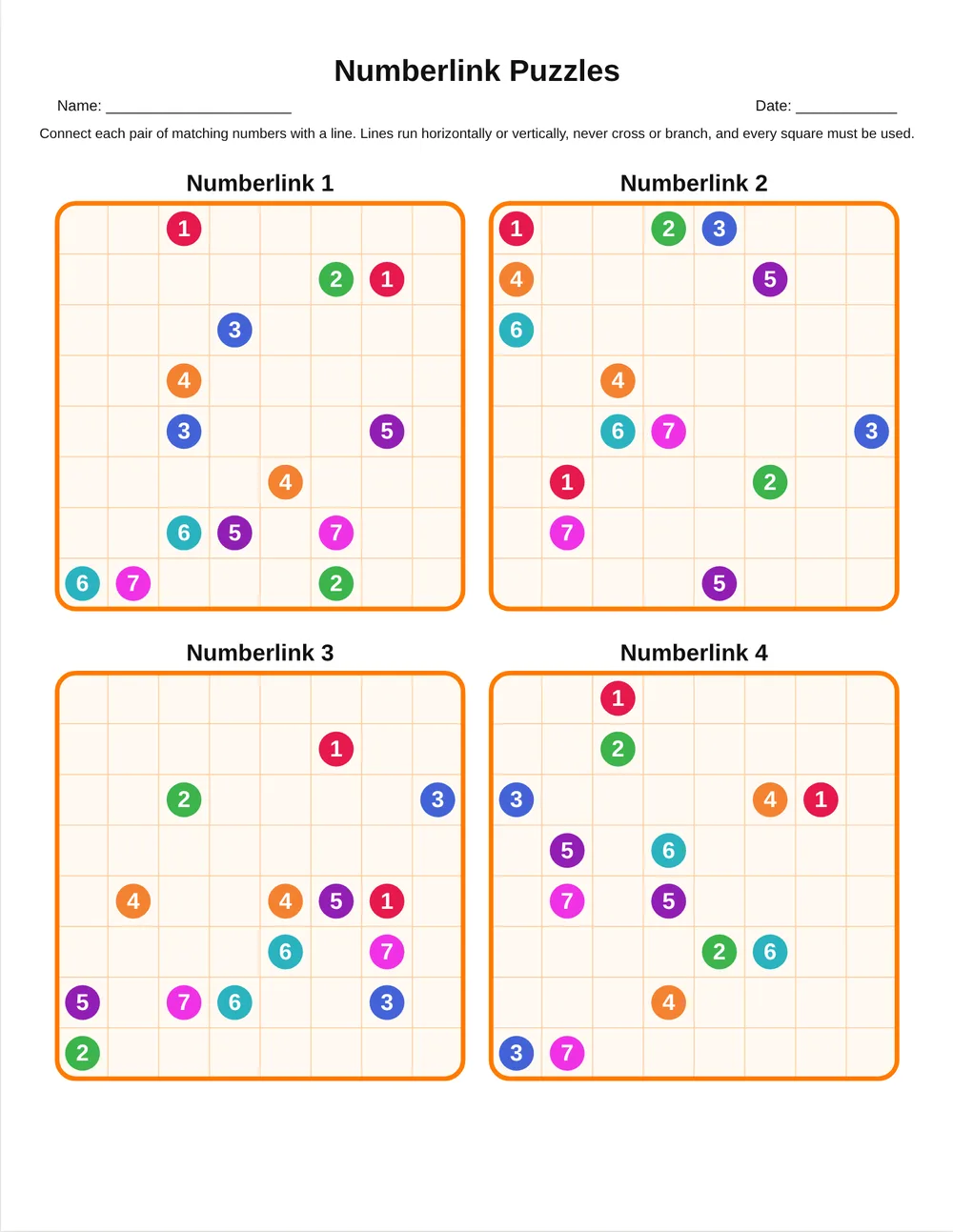
Logic puzzles are sometimes treated as a treat for the end of term. Used deliberately, they are much more: a daily way to practise reasoning, perseverance and precise communication — the habits behind every math standard. This article explains why puzzles such as sudoku, killer sudoku and Numberlink work in math class and gives ten concrete ways to use them, from two-minute warm-ups to a full puzzle club.
What logic puzzles teach
- Deductive reasoning: each move is justified by what is already known — the core of mathematical proof.
- Perseverance: puzzles reward sticking with a problem, and students see that being stuck is normal and temporary.
- Precision: one wrong digit or line breaks the solution, so students learn to check their work.
- Mathematical language: explaining “this must be 3 because…” builds the habit of justifying answers.
- Number sense: variants like killer sudoku, arrow sudoku and XV sudoku practise sums, bonds and doubles in context.
Why puzzles help reluctant learners
A logic puzzle does not look like a math test. Students who have decided they are “bad at math” often discover they are very good at sudoku or Numberlink — and the teacher can then point out that the thinking they just did is mathematics. Puzzles also have a low floor and a high ceiling: a 4×4 sudoku and a 9×9 Extreme killer sudoku use the same rules.
10 ways to use logic puzzles in class
- Warm-up of the day. Project a small puzzle while students settle; solve it together in three minutes.
- Early-finisher folder. A folder of mixed puzzles with answer keys keeps fast workers productive.
- Think-aloud modelling. Solve a puzzle in front of the class, narrating every deduction.
- Partner proofs. One student places, the other must agree and give the reason.
- Skill-matched variants. XV sudoku before bonds to 10, Kropki before doubling, Killer before missing addends.
- Differentiated stations. Same variant, three sizes or difficulty levels, so every group works at the right level.
- Weekly challenge board. A harder puzzle on the wall all week; solvers sign their name.
- Homework with families. A puzzle and its answer key go home for families to solve together.
- Puzzle club or brain-break book. A printed book of puzzles with rising difficulty for a club or a holiday.
- Students as designers. After solving, students explain which clue was the most important — the first step to understanding puzzle design.
Choosing the right puzzle
| Spatial reasoning | Numberlink, mazes |
|---|---|
| Pure logic | Classic sudoku, X-Sudoku, Jigsaw |
| Addition and number facts | Killer, Arrow, Little Killer, Frame sudoku |
| Comparison and order | Greater-Than, Thermo, Skyscraper sudoku |
| Number relationships | Kropki (consecutive and double), XV (sums to 5 and 10) |
Making puzzles part of a routine
The biggest gains come from regular, short practice rather than occasional long sessions. Five minutes, three times a week, with one strategy named each time, builds real skill over a term. Keep difficulty just above comfortable, celebrate effort and good explanations as much as solutions, and always have an answer key so students can check themselves.
A sample 15-minute lesson
- Hook (2 min): project a 6×6 killer sudoku and ask, “Which cage can only be one set of digits?”
- Model (4 min): solve two cells together, saying each reason aloud.
- Pairs (6 min): partners continue; every placement needs a spoken reason.
- Share (3 min): two pairs explain their most clever deduction; link it to today’s math topic, such as missing addends.
Assessing reasoning, not just answers
Ask students to annotate one move per puzzle: write the cell, the digit and the reason in a sentence. Over a few weeks you will see explanations move from “it fitted” to “the column already had 1, 2 and 4, so it had to be 3”. That shift — from guessing to justifying — is exactly what math standards describe as constructing viable arguments, and it carries straight into word problems and geometry.
Connecting puzzles to math practice standards
Most math curricula describe the same core habits: make sense of problems and persevere, reason abstractly, construct arguments, attend to precision and look for structure. A single sudoku touches all five. Students make sense of the constraints, persevere when stuck, argue for each digit, must be precise because one error breaks the grid, and notice structure such as “the 1s and 9s are in the same box”. Naming these habits when students use them in a puzzle makes it easier to ask for the same habits later in a fraction problem or a geometry task.
Where to get puzzles
Our free puzzle makers include classic sudoku, mazes, word searches and more. The full version adds two dedicated tools: the Sudoku Variety Studio (33 variants, 5 levels, story mode, one-click books) and the Numberlink Puzzle Maker (5×5 to 15×15, 3 levels, puzzle books). Every puzzle from both tools has exactly one solution and comes with an answer key.
Create your own puzzles in minutes
Unique solutions · answer keys · US Letter, A4 & KDP sizes · PDF, PNG, SVG, PPTX
Start your free day →Frequently asked questions
Are logic puzzles good for math skills?
Yes. They practise deductive reasoning, perseverance, precision and justification, and some variants also practise number facts.
Which logic puzzles are best for the classroom?
Sudoku and its variants, killer sudoku and Numberlink are easy to explain, have one correct answer and scale from young children to adults.
How often should students do logic puzzles?
Short sessions of five to ten minutes, two or three times a week, work better than occasional long sessions.
How can I differentiate logic puzzles?
Use the same puzzle type in different grid sizes or difficulty levels, so every group works at the right challenge.
Do logic puzzles help struggling students?
Often, yes. Puzzles look different from tests, have a low entry point and build confidence that transfers to math lessons.
Summary
Logic puzzles teach the habits of mathematics — reasoning, perseverance, precision and justification — in a form students enjoy. Use them little and often, match variants to the skills you teach, and give every student a puzzle at the right level.
More puzzle guides for teachers
We build math worksheets, puzzle makers, answer keys and classroom tools for teachers, tutors and homeschool parents, and keep these guides up to date.